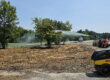

UCOR’s Y-12 deactivation and demolition (D&D) crews completed a recent initiative to decrease mercury vapor exposure in Alpha-4. By installing a new ventilation system, they are paving the way for increased operational efficiency and enhanced worker safety in the former uranium enrichment and lithium processing facility.
Crews’ personal protective equipment keeps them safeguarded from hazards. Despite this, time spent in the facility is minimal due to mercury vapors.
A comprehensive air modeling exercise proved that reestablishing the building’s ventilation system reduces these mercury vapors, allowing operations to increase inside the facility by minimizing exposure.
Zone 20 is the first successful installation of this calculated approach with additional zones being worked on simultaneously. This significant step provides crews with more safe operating time for D&D activities, particularly critical during warmer months when mercury vapors pose a heightened challenge.
Mercury in the Alpha-4 building presents one of the facility’s most complicated challenges, with over 4,000 gallons of elemental mercury still present. Crews have removed a significant amount of mercury from equipment inside the facility. Using these new fans reduce vaporized mercury exposure and increase the time available to remove the remaining amounts of mercury from equipment—effectively reducing risks, safeguarding personnel, and accelerating cleanup safely.
Key challenges faced by the team involved accurately sizing the new fans and determining if the reestablished ventilation system would pose any additional environmental risks. This data-driven approach, backed by multiple experts from a wide variety of disciplines, demonstrated that the reestablished ventilation system would not introduce new environmental hazards and will only enhance future operations.
Looking ahead, crews will install fans in five other zones. The project is slated to complete these efforts, alongside removing classified equipment, in 2028.