UCOR’s Local Safety Improvement Teams (LSITs) are taking continuous improvement seriously with unique ideas to encourage participation and promote safe practices.
Recently, the Y-12 Beryllium Bandits used a fun team activity where participants earned the opportunity to safely throw a pie at willing members of management to encourage engagement with the newly deployed Leading Indicator Tool (LIT). The activity boosted morale while increasing awareness of a valuable tool that helps identify safety strengths, improvement opportunities, and areas needing additional focus across UCOR.
Additionally, THE HIVE wrapped up a cornhole tournament that was promoted to boost safety observation submissions. Subject matter experts from Health Services, Elevate, and the Mental Wellbeing Center shared information on their Thrive initiative, which focuses on enabling you to live a life that allows you to thrive, prepares you to be able to perform the work you love, and helps you go home in the same condition in which you arrived to work.
The WILE-E LSIT at Heritage Center got creative and brought merchandise from a wide variety of vendors that were at the recent national Voluntary Protection Programs Participants’ Association (VPPPA) Safety + Symposium. LSIT meeting attendees didn’t get this merchandise for free—they had to earn it after answering safety specific trivia focusing on Type 2 hard hats, forklift requirements, PPE requirements, and more.
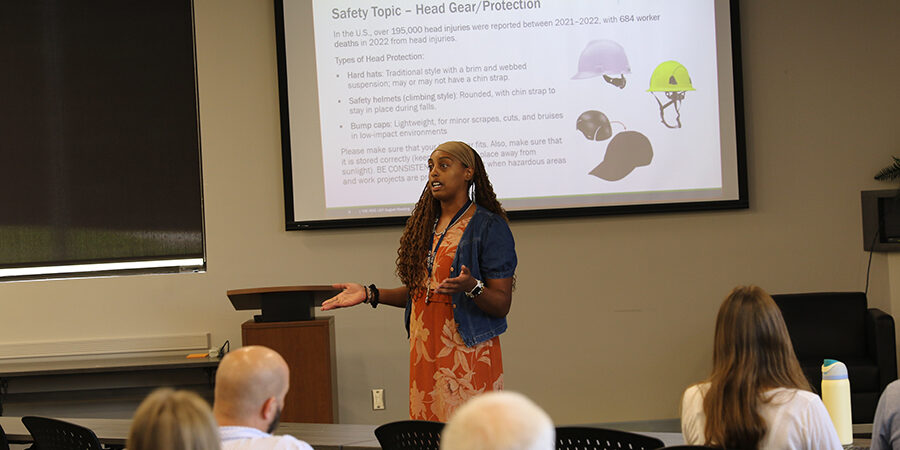
Finally, all 14 of UCOR’s LSITs have been sharing information on Type II hard hats, including how they differ from Type 1, how to wear them properly, and more. This Type 2 hard hat promotion effort stemmed from a recent LSIT forum, a monthly meeting where all LSIT chairs meet, giving teams a chance to learn from one another and bring that shared commitment back to their work areas.
If you love what your LSIT is doing or would love to contribute your ideas to how they can be even better, submit a safety observation on the Swift Observation Capture (SOC) Application.
A few safety observation reminders:
- Positive. Observe the work that’s been done – We do great work at UCOR, so if you observe someone working safely or notice a safe and well-maintained worksite, fill out a safety observation that recognizes this.
- Trending. Report a hazard that has already been corrected – When you a report a hazard that you’ve already corrected as part of your normal work scope, you provide valuable data about hazards that may otherwise go unnoticed.
- Elevate. Raise attention to an existing hazard – You should always report immediate hazards to your supervisor or the Facility Manager. You can also fill out a Safety Observation on an existing hazard to help ensure that it is tracked or elevated to a higher priority level within the organization.