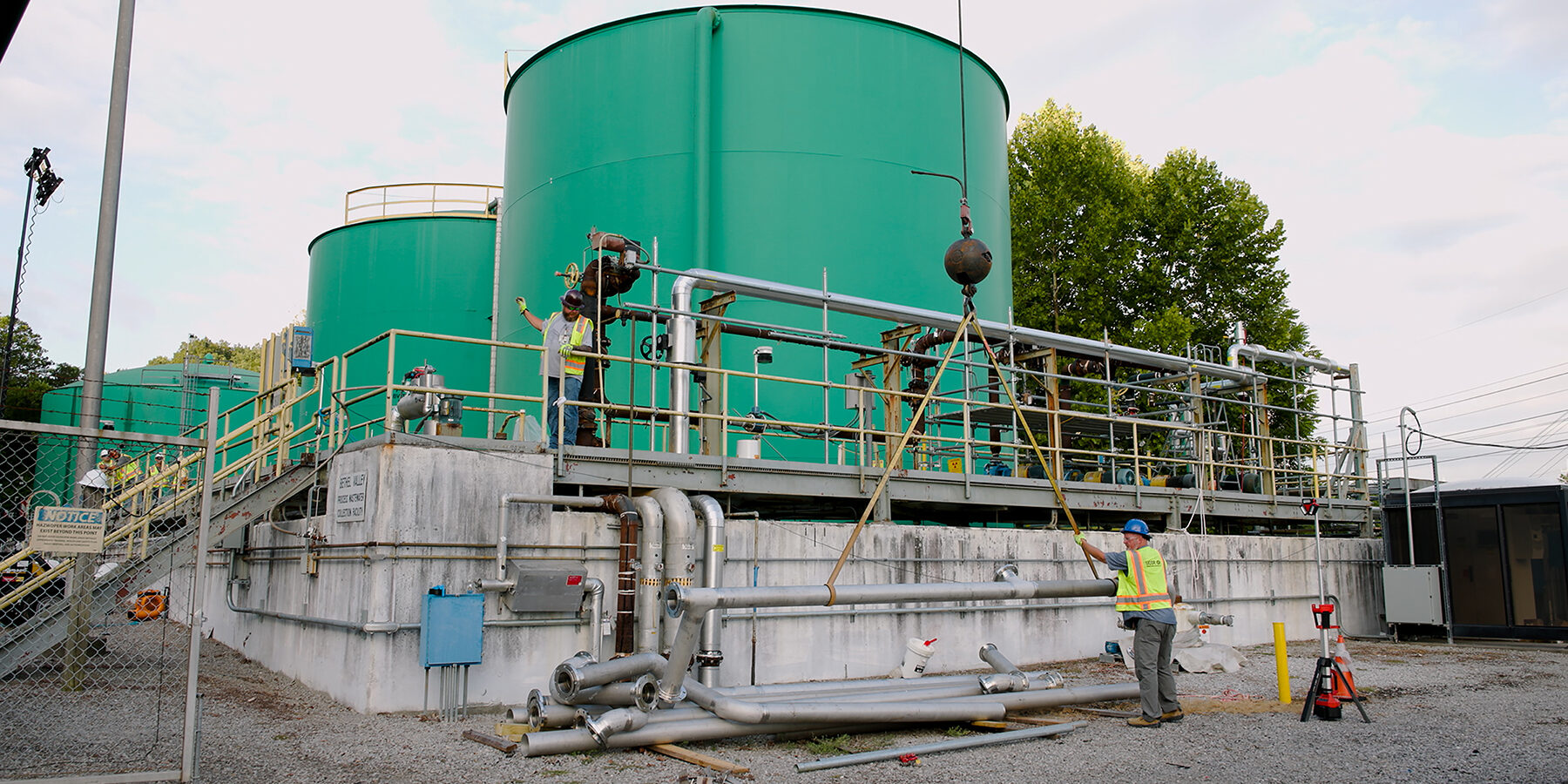

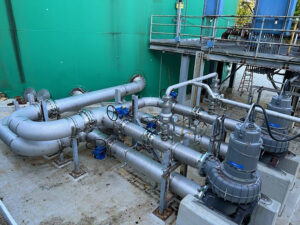
Before: Decades old piping After: New stainless steel piping
The ORNL Nuclear Operations team has finished a two-and-a-half-year piping replacement project supporting the Liquid and Gaseous Waste Operations (LGWO) system. This life extension effort significantly reduces the need for frequent maintenance and repair of the aging infrastructure by replacing all above-ground piping at the LGWO Process Waste Facility, Building 2600.
The LGWO system is critical to ORNL’s ongoing missions, and an outage would result in immediate impacts at the site. LGWO encompasses more than 60 facilities across ORNL with 27 miles of piping to process waste generated from cleanup operations, research and development laboratories, and nuclear reactors. On average, LGWO treats 110,000,000 gallons of waste every year.
At the Process Waste Facility, crews replaced 2,500 feet of carbon steel piping with stainless steel across 14 above-ground segments. Prior to the replacements, workers removed old insulation to measure, fabricate, and weld lines of various sizes. In addition to the piping upgrades, over 300 support components, such as valves and flanges, were updated to stainless steel.
As each of the segments was completed, heat trace systems were installed totaling approximately 5,000 feet before everything was insulated. Heat trace is essential to keep the pipes from freezing during inclement weather so operations are not impacted.
“Because of the careful planning and collaboration across this project, we had zero negative impacts to routine waste processing and faced no storage constraints during this multi-year task,” said James Wheeler, ORNL Nuclear Operations Area Project Manager.
Replacing the above-ground piping and other supporting pieces ensures LGWO continues to safely collect, store, and efficiently transfer wastewater for treatment without interruption to ongoing science missions at ORNL.