
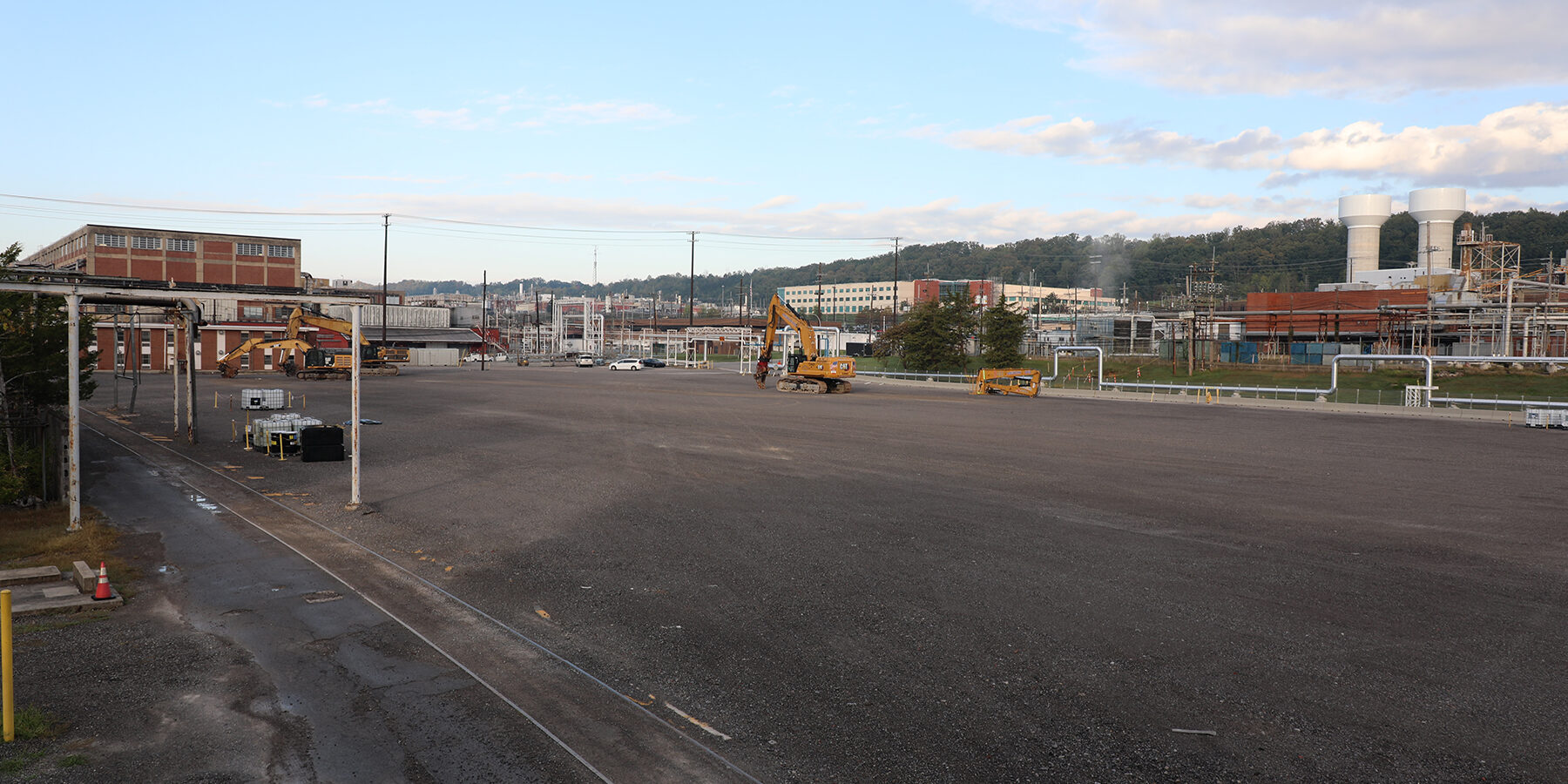
Crews at Alpha-2 have officially wrapped up site restoration on the surface of the former uranium enrichment facility’s footprint, an essential step to protect any potential subsurface contaminants from rising and bringing UCOR one step closer toward remediating below the surface. Completing this project brings UCOR one step closer toward transferring the land back to the National Nuclear Security Administration.
After four years of deactivation, which involved over 7,000 samples taken throughout the facility, and two years of demolition, this six-year effort accumulated over 83 million pounds of debris. Crews worked to sample, analyze, downsize, package, and ship this debris for disposal, requiring nearly 3,500 truckloads, with approximately 99.6% of demolition debris disposed of onsite. This effort is the largest demolition to date at Y-12, and the first time a uranium enrichment facility was brought down at the site. This project generated integral lessons learned for future Y-12 cleanup endeavors, including the former 210,000-square-foot uranium enrichment facility Beta-1, which will begin demolition early next year.
After demolition commenced and debris was removed, the team began efforts to restore the site. This involved generating topographical maps, grading the site, placing a non-permeable fabric, and spreading rock across the entire 325,000-square-foot area. Workers also restored groundwater monitoring wells that had to be plugged and abandoned during demolition. Crews shipped over 625,062 pounds of lead, filling 93 B-12 boxes that were removed during demolition and strategically planned for disposal alongside demolition debris.
Characterization crews also continued evaluating subsurface conditions after demolition concluded. When Alpha-2 was an operational facility, a series of sump pumps operated in the building basement to depress the water table and keep the basement from flooding with groundwater. Those sumps were discontinued during deactivation and the basement filled with a concrete-like material to facilitate demolition. To understand the elevation of the water table after demolition without the use of sump pumps, the team drilled two new monitoring wells at the footprint to replace wells abandoned during deactivation. The information gained is critical to inform future remedial actions before the 2.5-acre land parcel can be transferred back to NNSA for future modernization efforts.
Crews begin drilling into the Alpha-2 footprint to install wells that will monitor groundwater conditions over the next few years