UCOR’s ORNL D&D crews filled 120 feet of legacy ductwork connecting Buildings 3001 and 3002 with a flowable cement substance called controlled low-strength material (CLSM). This work significantly reduces risk by protecting workers, a historic landmark, and equipment from exposure during demolition of one of the last remaining structures tied to the Oak Ridge Graphite Reactor (OGR).
Following demolition of Building 3003—a fan house and one of three support facilities for the former reactor—10,000 square feet of space was opened for crews to prepare for demolishing Building 3002, a former filter house. This work helps clear the way for modernization at DOE’s largest science and energy laboratory.
Building 3002 is in a congested area near Building 3001. The two are connected by an underground concrete duct tied to Building 3001’s ventilation system. That connection created a potential risk that contaminants or hazards could reach the ventilation system of the museum during demolition.
To isolate the buildings, crews poured more than 200 cubic yards of CLSM, a low strength mix of fly ash, sand, and cement, into the underground duct, successfully preventing air and contamination from reaching Building 3001.
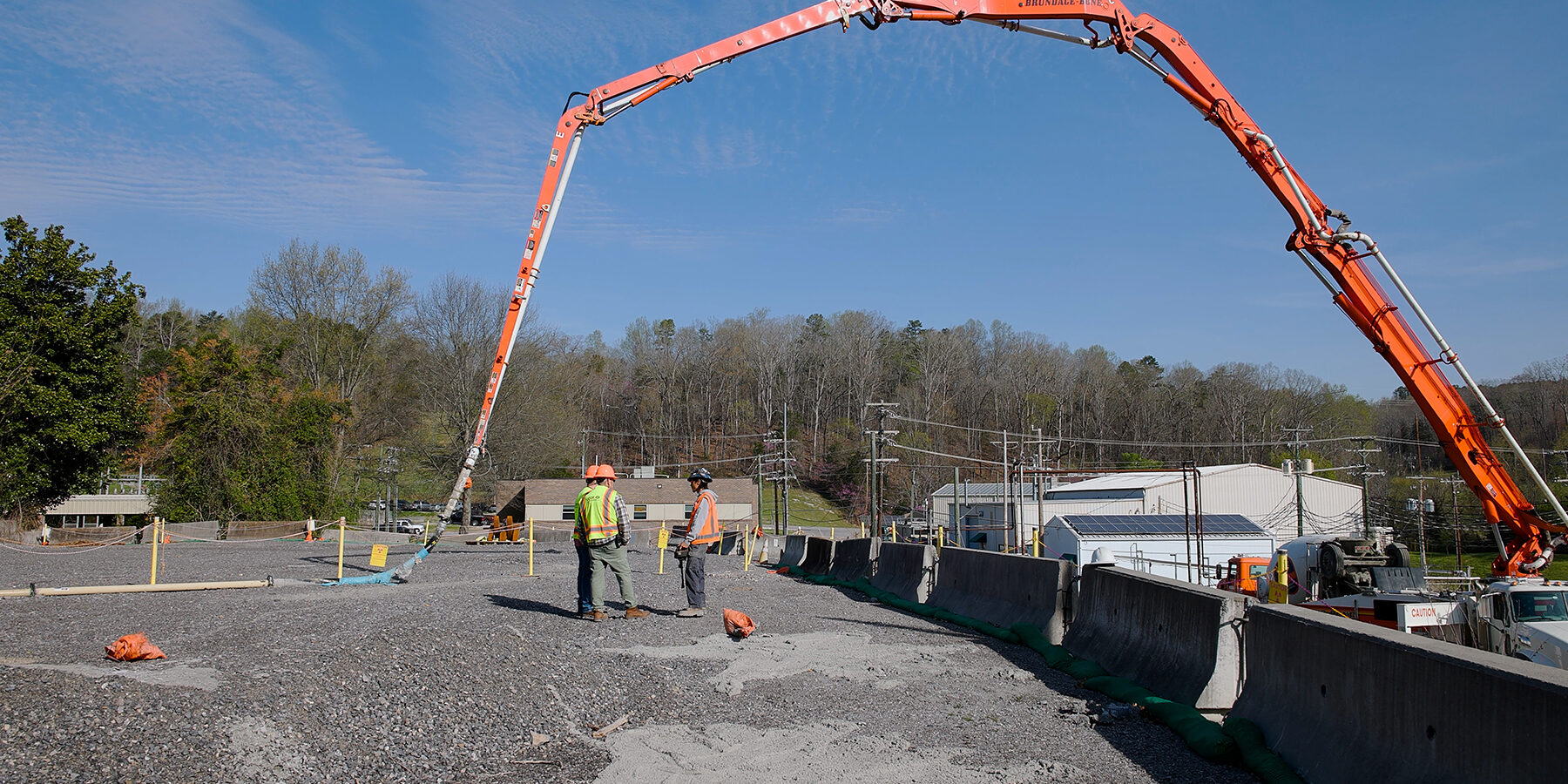
This work came with challenges, including a steep hill posing equipment complications, and using a concrete pump truck to avoid concrete trucks entering a high-security area near Isotek’s vehicle barrier system.
Crews connected 400 feet of piping to a pump truck, allowing CLSM to reach Building 3002, avoiding disturbance to the historic landmark and eliminating other challenges.