
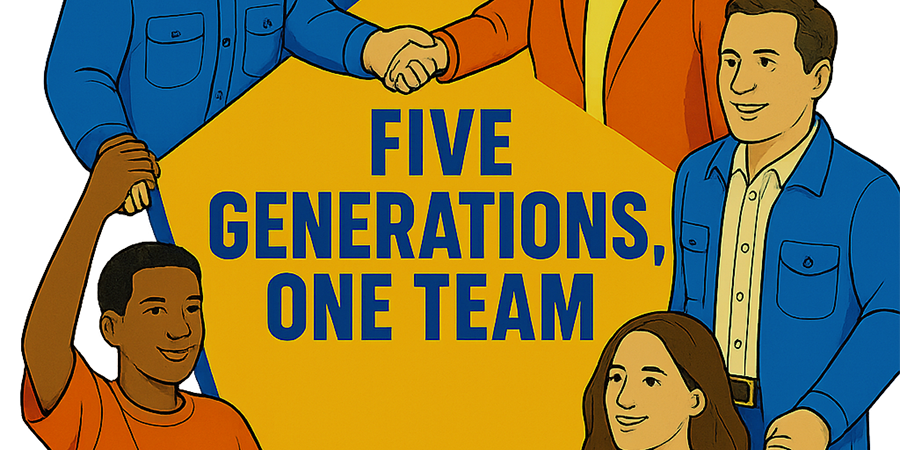
(This article kicks off our Five Generations, One Team series about what it’s really like to work across five generations—and how we can make that experience a whole lot smoother together.)
For the first time in modern history, we routinely have up to five generations working side-by-side: Traditionalists, Baby Boomers, Gen X, Millennials, and Gen Z. While social media loves to pit these groups against each other with memes and sweeping generalizations, the truth is far more collaborative.
Generational diversity is a form of cognitive diversity. When we move past stereotypes, we discover that different eras of lived experience can make our teams incredibly resilient.
Tips for Managers
- Audit your assumptions: Notice if you find yourself attributing a performance issue or communication style to someone’s age (e.g., assuming a younger employee is impatient or an older employee dislikes change). Address the behavior itself, not the birth year.
- Promote cognitive diversity: When forming project task forces, intentionally mix tenures and age groups to ensure both deep institutional knowledge and fresh perspectives are represented.
Tips for Colleagues
- Ask, don’t assume: If a colleague’s work habit puzzles you, ask them about it directly and curiously rather than chalking it up to a generational trait.
- Check your language: Avoid age-related jokes or dismissive comments (from “Okay, Boomer” to “Kids these days”) that can subtly alienate teammates.
You can find the articles in this series in HUBI’s User Corner as they are published.