A collaborative effort between UCOR and the UT-Battelle (UT-B) HazMat Team recently led to the successful removal of highly complex legacy drums that previously came from ETTP. This major milestone represents a critical step toward determining downstream disposal paths for legacy materials.
Physical operations began with the UT-B HazMat Team using the REMOTECH Spartan robot to safely puncture the legacy drums. This ground vehicle system features articulating tracks and a motorized reach, which allowed the team to access and depressurize potentially bulging drums without placing personnel in harm’s way.
Immediately following the puncturing, UCOR Industrial Hygiene and Radiological Control personnel conducted real-time monitoring to ensure the safety of the work area.
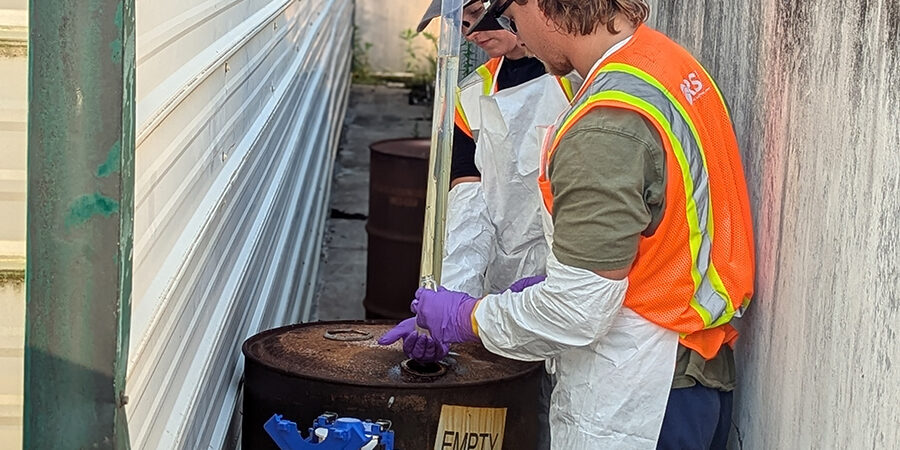
Once cleared, technicians sampled the drum contents for future characterization.
UCOR labor forces then concluded the evolutions by safely repackaging the punctured drums into secure overpacks.
Due to the complexity of the legacy drums, achieving this required more than six months of planning and hazard evaluation to successfully integrate the three distinct work plans between each group, which involved multiple unique safety briefings tailored to the specific regulatory controls and operational steps for each job.
Thorough preparation and consistent communication enabled the seamless handoffs of the drums between each group. As a result, the experts behind the effort successfully secured these legacy materials, which are now undergoing evaluation before permanent disposal.